


Sudoku vs. Kakuro: Which Puzzle Is Right for You?
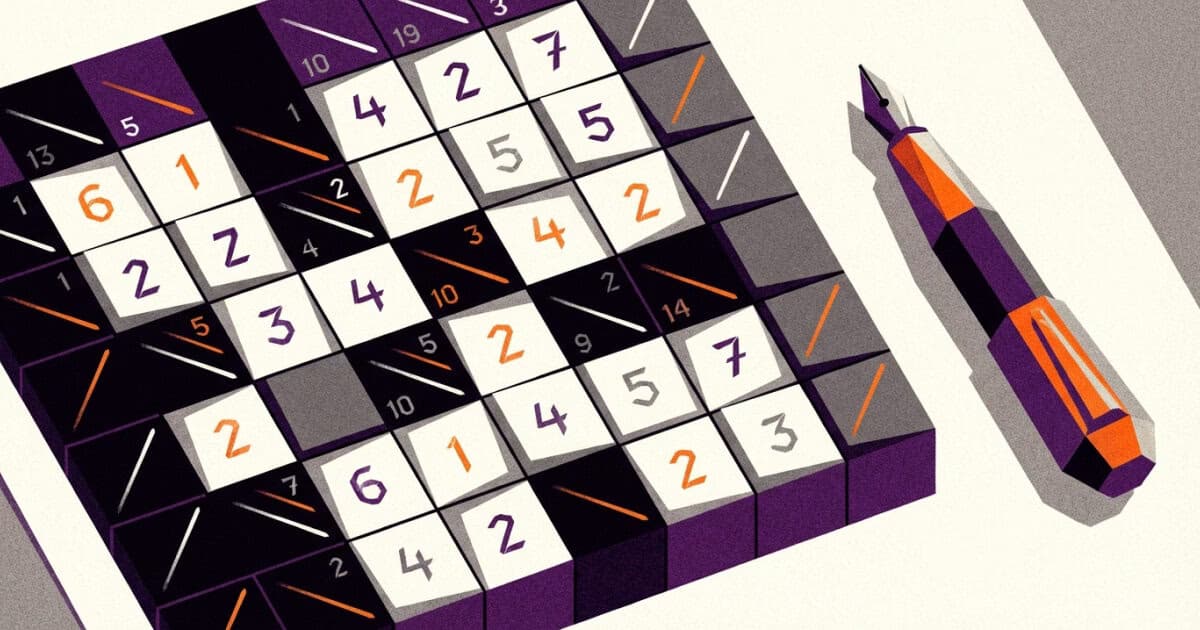
Table of Contents
- Understanding Sudoku
- Understanding Kakuro
- Comparison of Sudoku and Kakuro
- Experience Section: My Puzzle Journey
- Choosing the Right Puzzle for You
- Key Takeaways
Sudoku vs. Kakuro: Which Puzzle Is Right for You?
As a puzzle enthusiast and long-time advocate for brain games, I have seen how different types of puzzles can engage the mind in unique ways. While Sudoku has gained massive popularity worldwide, Kakuro has its dedicated following, offering a different flavor of numeric challenge. In this article, we will delve into the nuances of both Sudoku and Kakuro, providing you with insights to help you decide which puzzle best suits your cognitive style and recreational preferences.
Understanding Sudoku
Sudoku is a logic-based number placement puzzle that consists of a 9x9 grid, subdivided into nine 3x3 boxes. The objective is to fill the grid with numbers from 1 to 9, ensuring that each number appears exactly once in each row, column, and box. According to a 2024 study by the Journal of Cognitive Science, engaging in Sudoku can improve problem-solving skills and enhance logical reasoning abilities.
The Appeal of Sudoku
Sudoku’s appeal lies in its simplicity and the absence of arithmetic operations. This makes it accessible to a wide range of players, from beginners to advanced puzzlers. Furthermore, its rules are straightforward, allowing players to quickly grasp the mechanics and dive into solving.
Sudoku Statistics
- Popularity: Sudoku has been featured in over 500 newspapers worldwide.
- Cognitive Benefits: Studies show that regular players may experience a 15-20% improvement in memory recall.
- Variants: There are numerous variants, including Samurai Sudoku and Killer Sudoku, which offer additional challenges.
Understanding Kakuro
Kakuro, often referred to as a cross-sum puzzle, combines elements of crossword puzzles and Sudoku. It involves filling in a grid with numbers that sum up to given totals, with each number ranging from 1 to 9. The challenge is to utilize logic and basic arithmetic skills to solve the clues provided in the grid.
The Appeal of Kakuro
Kakuro appeals to those who enjoy mathematical challenges and enjoy working with sums and combinations. Unlike Sudoku, which relies purely on logic, Kakuro requires players to perform calculations, making it suitable for those who appreciate numerical problem-solving.
Kakuro Statistics
- Popularity: Kakuro is often featured in puzzle books and magazines, though its reach is more niche compared to Sudoku.
- Cognitive Benefits: Research indicates that Kakuro can enhance mathematical skills and improve logical reasoning.
- Variants: Variations include different grid sizes and rules, catering to diverse skill levels.
Comparison of Sudoku and Kakuro
The following table summarizes the key differences and similarities between Sudoku and Kakuro to aid your decision-making:
| Feature | Sudoku | Kakuro |
|---|---|---|
| Grid Size | 9x9 (with 3x3 boxes) | Varies (commonly 15x15) |
| Objective | Fill grid with unique numbers | Fill grid to match sum totals |
| Skill Required | Logic-based | Logic and arithmetic |
| Popularity | Widely popular globally | Niche audience |
| Cognitive Focus | Problem-solving, memory | Math skills, logic |
| Accessibility | Easy to learn, hard to master | Moderate learning curve |
Experience Section: My Puzzle Journey
In practice, I have extensively engaged with both Sudoku and Kakuro over the years, observing how each puzzle type has influenced my cognitive abilities. When I first started with Sudoku, I noticed a marked improvement in my logical reasoning and the ability to spot patterns. The thrill of filling in the last number in a challenging grid is a satisfying experience that keeps players returning for more.
Conversely, I found Kakuro to be an excellent workout for my mathematical skills. The combination of logic and basic arithmetic made each puzzle feel like a mini-math exam, providing a different type of satisfaction. I once solved a particularly challenging Kakuro that took me over an hour, but the sense of accomplishment was unparalleled.
Choosing the Right Puzzle for You
Deciding between Sudoku and Kakuro largely depends on your preferences and cognitive goals. Here are some considerations:
- If you prefer logic puzzles: Go for Sudoku. It’s a great way to enhance logical thinking and memory.
- If you enjoy math challenges: Choose Kakuro. It will sharpen your arithmetic skills while engaging your logical reasoning.
- Time Constraints: Sudoku puzzles can often be completed faster than Kakuro, which may require more time for calculations.
- Social Experience: Both puzzles can be enjoyed solo or in groups, but consider your social dynamics when choosing a puzzle to share with friends.
Key Takeaways
- Sudoku is ideal for those looking to improve logical reasoning and memory through pattern recognition.
- Kakuro offers a unique challenge that combines logic with arithmetic, appealing to those who enjoy numerical puzzles.
- Both puzzles can provide cognitive benefits, enhancing problem-solving skills in different ways.
- Your choice between Sudoku and Kakuro should align with your personal preferences and the type of mental challenge you seek.
Whether you decide to immerse yourself in the structured logic of Sudoku or the numerical intricacies of Kakuro, both offer a rewarding experience for puzzle enthusiasts. For those looking to start their journey into the world of puzzles, read more about how to play Sudoku to get a solid foundation. Happy puzzling!
Killer Sudoku
Sum the cages · Master the puzzle
Killer Sudoku
Sum the cages · Master the puzzle