


How to Play Skyscrapers: Rules, Clues and Tips
Skyscrapers is a logic puzzle about a small city seen from its edges. Each cell of a square grid holds a building, and the number in it is the building's height. Every row and every column holds each height once. The numbers outside the grid tell you how many buildings you can see from that side, because a taller building hides the shorter ones behind it. On a 5×5 grid, the heights are 1 to 5.
The rules of Skyscrapers
- Each row holds the heights 1 to the grid size, once each.
- Each column holds them once each, too.
- A clue outside the grid counts the buildings you see when you look along that row or column from that side.
- A building is seen only if it is taller than every building in front of it.
That last rule is the heart of the puzzle. Here is one row of five buildings, seen from both ends.
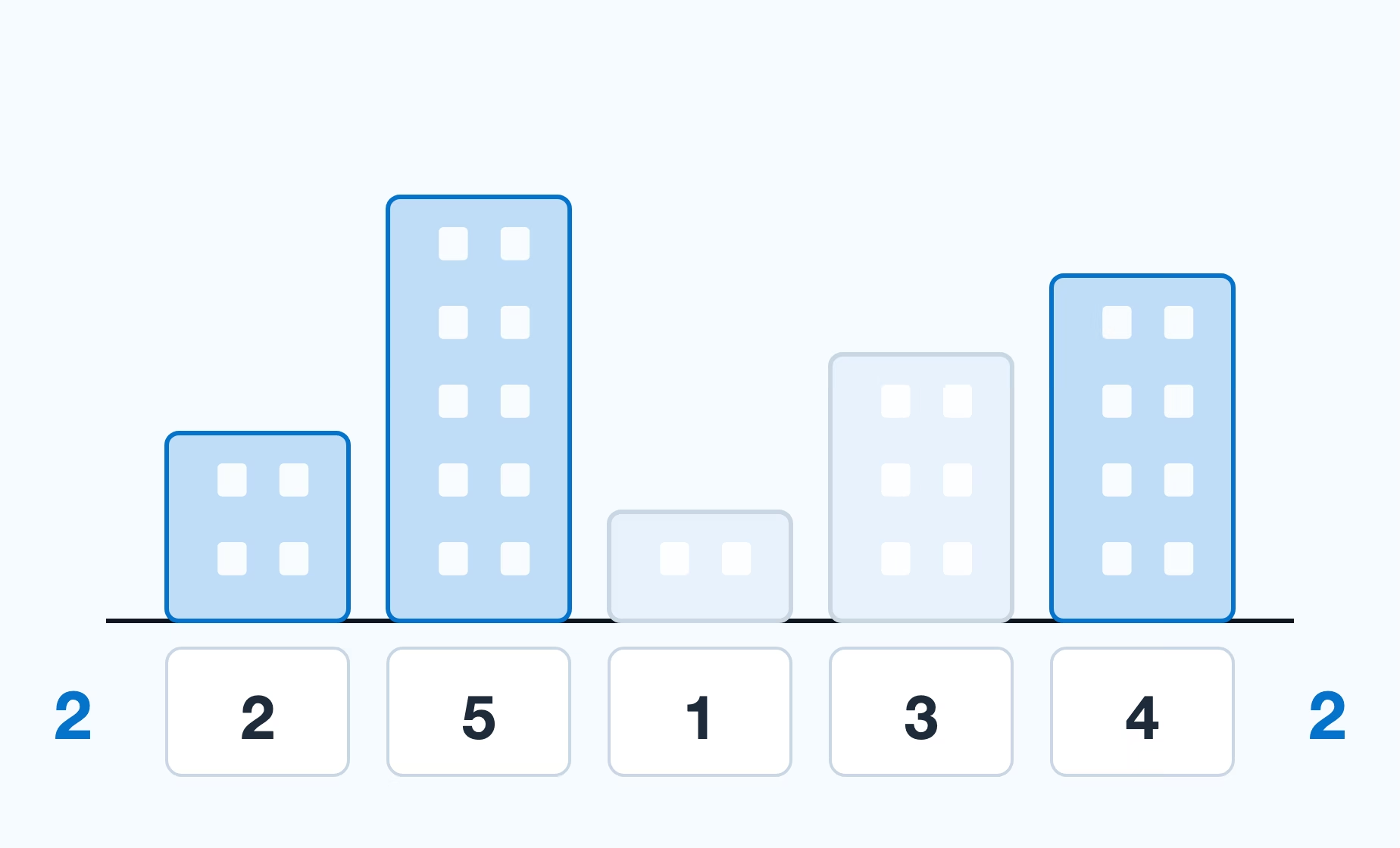
From the left, you see the 2, then the 5 behind it. The 5 hides everything after it, so the clue is 2. From the right, you see the 4, then the 5. The 3 and the 1 are hidden behind the 4. So that clue is 2 as well.
What the clues tell you
Some clues decide a lot on their own:
- A clue of 1: the tallest building stands right next to it. Nothing else can be seen, so on a 5×5 grid the first cell is 5.
- A clue equal to the grid size: every building is seen, so they rise in order. On a 5×5 grid, a clue of 5 means 1, 2, 3, 4, 5.
- A clue of 2: the first cell is not the tallest. If it were, it would hide all the others.
- A big clue: the first cell is low. With a clue of 4 on a 5×5 grid, the first building is at most 2.
Clues on opposite ends of a line work together. Their sum can never be more than the grid size plus one.
How to solve your first Skyscrapers
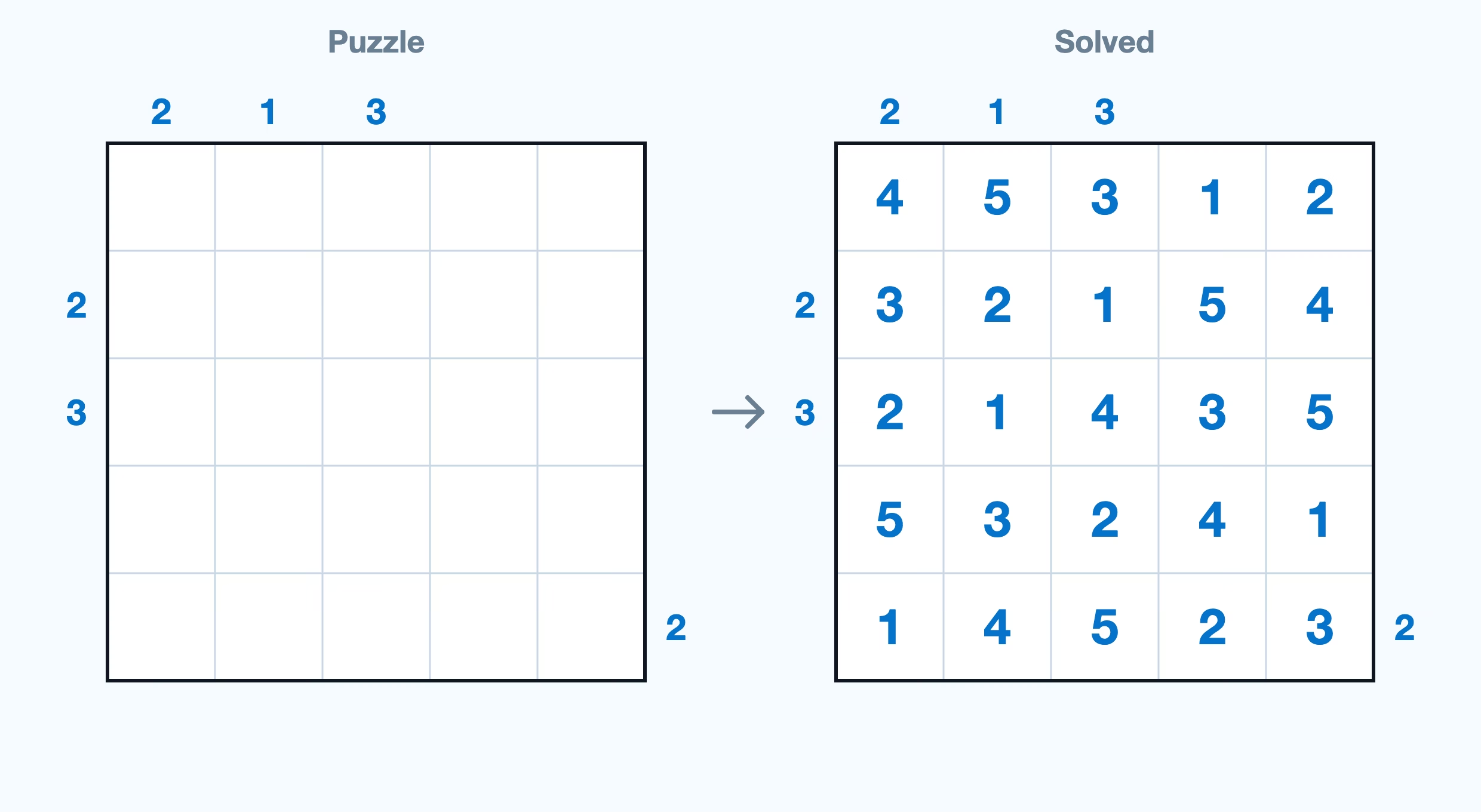
In this example the grid starts empty, with six clues around it. The clue 1 above the second column is the best place to start: the top cell of that column must be 5. Next, look at the clue 2 on the left of the second row. Its first building cannot be 5, and the second column already has its 5 at the top. So the 5 of that row stands in the third, fourth or fifth cell.
From there, work like this:
- Place the sure buildings first, from clues of 1 and clues equal to the grid size.
- Mark what each clue rules out. Use Notes for the heights a cell can still take.
- Use rows and columns, as in sudoku. A height placed once cannot appear again in its row or column.
- Count the view again whenever a row is almost full. Often only one order of the last two buildings matches the clue.
If a building breaks a rule, the game marks it. Undo takes back your last moves, and Erase clears a cell.
Playing Skyscrapers on Sudoku Pro
Our Skyscrapers is a 5×5 grid with heights 1 to 5, free in your browser. There are 20 places for clues around the grid, and the five levels show fewer of them:
| Level | Clues shown | Buildings already placed |
|---|---|---|
| Easy | 18 to 20 | 4 or 5 |
| Medium | 14 to 16 | 2 or 3 |
| Hard | 10 to 13 | 1 or 2 |
| Expert | 8 to 10 | 0 or 1 |
| Extreme | 6 to 8 | none |
Hints fill in one cell when you would like help. For another puzzle where every row and column holds each number once, try Futoshiki with its greater-than signs or Calcudoku with its arithmetic cages.
FAQ
- Only one building is visible, so the tallest building stands right next to that clue.
- That never happens, because each height appears only once in a row or column.
- It is a 5×5 grid with heights 1 to 5, on five levels from Easy to Extreme.
- Yes. Each clue counts from its own side only, looking straight along its row or column into the grid.

Killer Sudoku
Sum the cages · Master the puzzle

Get Mobile App
Play sudoku on your phone with no limits

